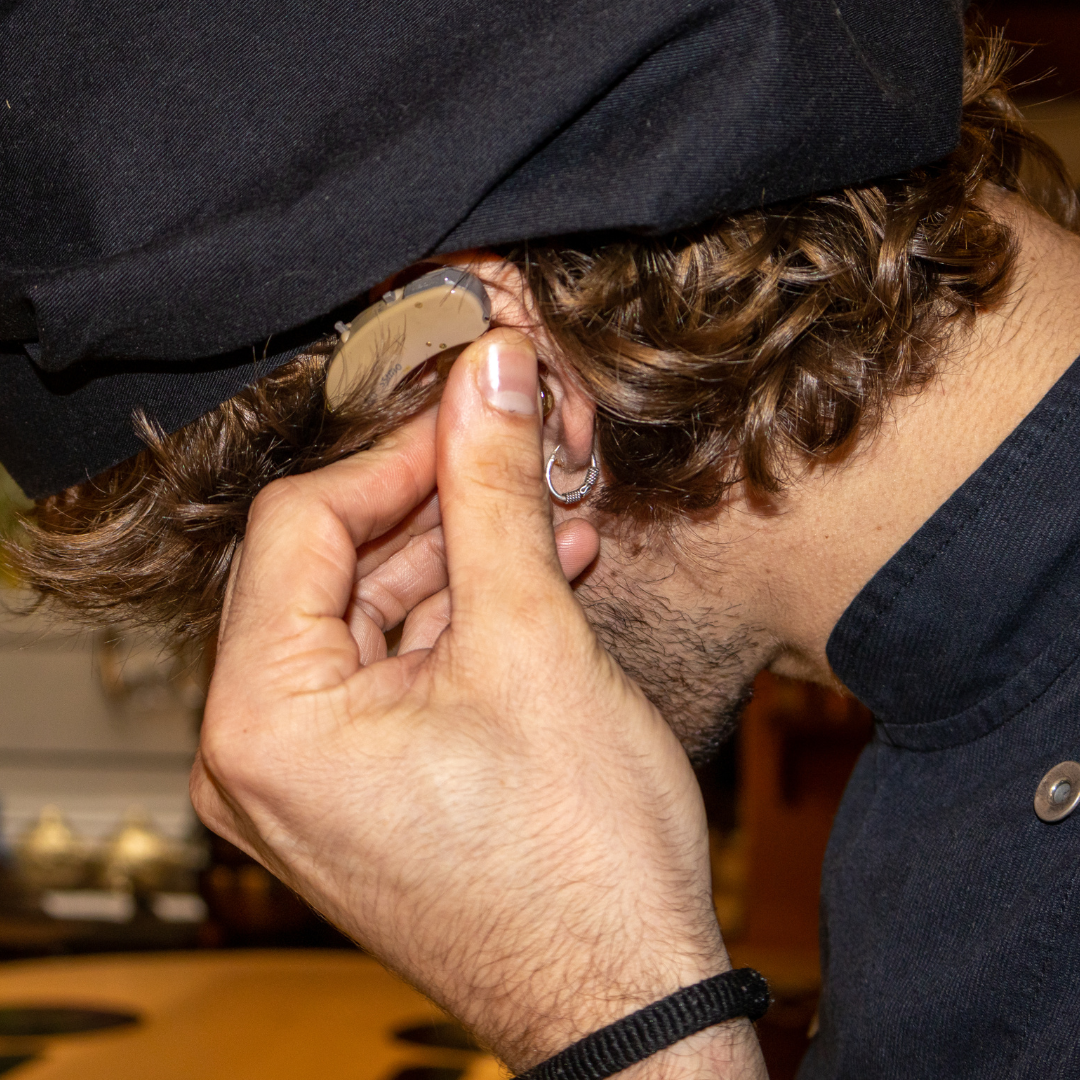
Tracking speech in busy dining venues can feel exhausting when environmental noise drowns out your hearing. Our audiology clinic conducts specialized testing to evaluate hearing in both quiet sound booths and noisy simulations to isolate the underlying cause. Once the diagnostic etiology of your difficult hearing is established, we implement personalized clinical and technological strategies.
Why Do I Hear Well in Quiet but Struggle in Restaurants?
In quiet conditions, an optimal signal-to-noise ratio ensures that the desired speaker sounds markedly clearer than surrounding sound. Dining rooms present an unfavorable acoustic reversal of this dynamic. Cross-talk, ambient music, dishware noise, and harsh acoustic reverberation interfere with speech clarity, forcing your brain to labor to extract the target voice.
This symptom pattern often reflects underlying high-frequency hearing loss, central processing dysfunction, or physiological aging of the auditory nerve. Factors including listening fatigue, poor dining lighting, acoustic distance, and wandering attention make comprehension significantly harder. Certain patients demonstrate normal sensitivity on routine audiograms while struggling significantly during advanced speech-in-noise testing. Inability to track speech in crowded restaurants merits audiological evaluation even when standard daily hearing sounds completely normal.
Clinical Evaluation of High-Frequency Hearing Loss
Our diagnostic process starts with a detailed case history reviewing problematic listening scenarios, occupational noise exposure, tinnitus, ototoxic medications, and familial genetics.
Standard pure-tone audiometry gauges the lowest volume thresholds detectable across varying acoustic frequencies via specialized earphones and bone oscillators. A clinical presentation of high-frequency loss produces a downward-sloping audiogram where auditory thresholds worsen significantly at higher frequencies. Supplementary assessments routinely include diagnostic tympanometry to analyze middle-ear status alongside word-recognition testing to determine speech clarity.
Because a quiet booth does not recreate a busy dining room, speech-in-noise testing can add valuable information. It evaluates sentence-level speech comprehension as competing background babble increases in volume. Combined, these clinical findings determine whether your symptoms stem from acoustic audibility, word clarity, central noise filtering, or multifactorial causes.
How Auditory Processing Difficulties Impact Adult Hearing
An auditory processing disorder compromises how the central auditory pathways and brain decode incoming acoustic information. The ears may detect tones at expected levels, but the brain may have difficulty organizing competing signals, distinguishing similar speech sounds, or following rapid conversation. We systematically verify peripheral hearing health before establishing whether an advanced auditory-processing evaluation or medical referral serves your needs.
What Strategies Can Improve Hearing in Noisy Environments?
Strategic behavioral modifications can substantially improve the auditory signal reaching your ears while maximizing supportive visual cues. Before heading out to eat, select dining spots with quieter acoustic profiles or dine during low-volume hours. Dining locations utilizing sound-absorbing elements like booths, felt panels, window curtains, and carpet offer better acoustics than high-ceilinged rooms with hard surfaces.
In-venue communication guidelines:
- Request table placement positioned away from dishwashing stations, bustling bars, sound speakers, and celebratory gatherings.
- Sit with a perimeter wall directly behind you to cut down on ambient noise approaching from the rear.
- Position yourself to directly face companions under bright lighting to enhance facial comprehension.
- Minimize the physical gap separating you and the person speaking as much as reasonably possible.
- Position your better-hearing ear directly toward your main conversational partner.
- Prompt companions to rephrase unclear sentences with alternate terminology instead of repeating identical words.
- Confirm important details rather than pretending to understand.
- Step into a quiet area for a few minutes when listening fatigue begins to compromise focus.
- Invite companions to focus on clear articulation and a measured, comfortable cadence.
- Yelling distorts natural speech formants and rarely makes spoken words easier to decipher.
Assistive Hearing Tools and Technology for Complex Acoustic Environments
Optimal technological solutions depend entirely on the etiology of your symptoms, target acoustic spaces, and whether measurable hearing loss exists. Professionally fitted hearing aids may use directional microphones, digital noise reduction, and dedicated restaurant programs to emphasize speech from the front and reduce some competing sound. However, users must maintain realistic expectations, as no clinical technology can eliminate every competing background speaker entirely.
Incorporating a dedicated remote microphone provides an even more pronounced improvement in signal-to-noise ratio. Worn on the speaker’s collar or set on the table, the microphone broadcasts direct audio to paired hearing aids or specialized receivers. This strategy bypasses the detrimental effects of room reverberation, distance, and localized background chatter.
Supplementary auditory solutions include:
- Wireless conference table microphones that capture multi-speaker discussions
- Telecoil sensors configured to access hearing-loop broadcasts in looped facilities
- Mobile device live-captioning programs and speech-to-text transcription software
- Earbuds or hearables with compatible assistive-listening features
- Decibel-monitoring apps and crowd-sourced dining platforms that track restaurant noise
Our team can compare these systems, verify device compatibility with your hearing aids, and provide comprehensive training on their use.
Clinical Audiology Care for Hearing in Complex Noise
A hearing evaluation can move the conversation beyond “I hear fine in quiet.” We analyze the exact social venues, voice registers, and noise environments that cause difficulty to administer tests matching your lifestyle. The assessment may include pure-tone thresholds, middle-ear testing, word recognition, and speech-in-noise measures. Diagnostic auditory-processing testing may be recommended if your clinical symptoms and baseline evaluations suggest central auditory dysfunction.
Abrupt auditory reductions, unilateral hearing shifts, or rapid functional deterioration require prompt assessment by an ear, nose, and throat physician. Tailored audiological treatment identifies the exact origin of listening breakdown rather than assuming environmental dining noise is the sole culprit.
Schedule a Diagnostic Hearing Evaluation Right Away
If dining in loud spaces leaves you feeling isolated, fatigued, or guessing at missed speech, contact us to schedule a thorough hearing evaluation. Our specialists can introduce effective interventions to support your hearing in noisy environments via precision hearing aid fittings, assistive devices, or audiological rehabilitation.
Connect with us today to arrange your clinical visit and take the first step toward clearer, easier dining communication.