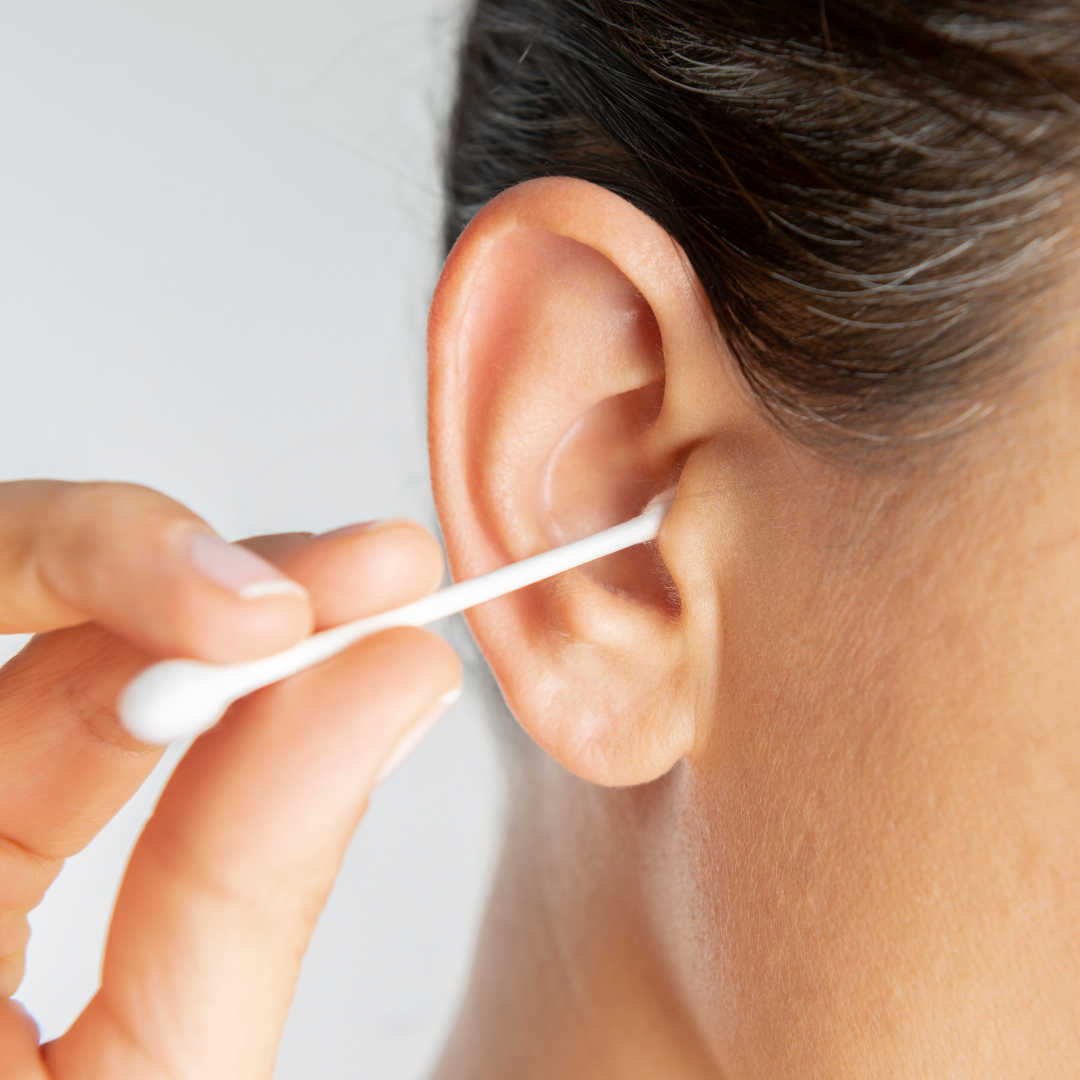
While cotton buds look like simple cleaning instruments, inserting them directly into your ear canal complicates hygiene and can injure sensitive structures. Our specialists determine if cerumen warrants clinical clearing and advise on targeted methods designed to protect your hearing health. Healthy ears rarely require aggressive manual intervention; nevertheless, when blockage develops, we assist patients in safely extracting excess cerumen.
Why Are Q-Tips Bad for Your Ears?
Clinically speaking, earwax, or cerumen, should never be regarded as dirt or debris. It traps dust and debris, helps limit bacterial growth, lubricates the ear canal, and protects its sensitive skin. Routine chewing and epithelial cell migration continuously transport spent wax toward the concha, where it falls out or clears during bathing.
A Q-Tip placed inside the canal can disrupt this self-cleaning process. While the fibrous tip might extract superficial wax particles, it predominantly forces deeper accumulations toward the tympanic membrane. Continuous swab usage packs loose secretions into a hardened mass, generating an occluded sensation that tempts patients into additional probing.
Cotton applicators are suitable for tracing the exterior folds of the ear, but they must remain entirely outside the canal opening.
How Can Ears Get Damaged from Q-Tip Use?
The epithelial surface inside the ear canal remains exceptionally fragile and easily abraded. Minor scratches can trigger localized pain, bleeding, and bacterial infiltration, substantially elevating the risk of otitis externa. There is also a risk that the cotton tip will detach and become stuck deep inside the auditory canal.
Swab-related clinical injuries include:
- Cerumen driven into deep obstructive impactions
- Scratches, irritation, swelling, or bleeding
- Secondary bacterial otitis externa
- Foreign body retention including detached cotton fibers
- Structural tears or perforations across the eardrum
- Dislocation or injury of the delicate hearing ossicles
- Transient hearing reduction or permanent sensorineural loss
- Ringing in the ears, balance disruption, or sharp ear pain
Severe injuries are infrequent yet emerge readily if an arm is bumped, the swab slips, or the stick is driven too far.
How Frequently Should You Remove Earwax?
Clinical extraction of earwax is not routinely required on a fixed schedule for most patients. Physiologically stable ears continuously migrate wax outward, while standard showering takes care of the visible ear. Overcleaning can dry or irritate the canal and may increase the likelihood of infection or impaction.
Extraction is medically indicated when cerumen fully occludes the lumen, blocks visual examination of the eardrum, compromises hearing aid function, or induces pain.
What Are Safe Ways to Remove Earwax At Home?
In the absence of earwax symptoms, allowing natural physiological clearance is universally the safest strategy. Clean exclusively around the exterior auricle using a soft, moist cloth, letting the auditory canal clean itself naturally.
When wax needs softening, we may recommend an over-the-counter cerumen-removal product or drops containing ingredients such as mineral oil, glycerin, saline, or carbamide peroxide. Apply only the specified dosage and never exceed the designated application duration outlined on the label. Stop if the drops cause pain, marked dizziness, rash, or worsening symptoms.
At-home ear irrigation is not universally safe and requires clinical clearance and technique demonstration from an audiology professional beforehand. Never attempt to flush your ear canal with a pressurized dental water irrigator. Do not use dangerous devices like ear candles, metal scrapers, endoscopic camera tools, hairpins, or unverified suction units. Such unapproved devices easily burn canal walls, cut fragile skin, puncture the eardrum, or drive cerumen deeper.
Indications for Scheduling a Professional Ear Cleaning
Arrange a consultation when aural fullness continues after drop therapy, wax is severely impacted, or home interventions prove ineffective. Expert removal is the safest path for patients who struggle to hold still, individuals with narrow ear canals, hearing aid wearers, or those with surgical contraindications to irrigation.
You should seek professional assessment for:
- Severe ear pain, intractable itching, or outer ear tenderness
- Active bleeding, pus formation, clear exudate, or malodorous drainage
- Systemic fever spikes or acute swelling near the external ear
- New acoustic tinnitus sounds or unstable balance sensations
- Sudden hearing drops or auditory deficits that remain after wax removal
- Concern regarding a perforated eardrum or foreign cotton debris
- Frequent wax buildup that occludes or damages hearing aids
Any rapid-onset hearing loss in one ear must be evaluated as an emergency rather than dismissed as a wax plug. Immediate assessment allows clinicians to differentiate an external canal obstruction from an urgent inner-ear pathology.
Clinical Methods for Safe Earwax Extraction
The clinical process starts with high-magnification otoscopy or microscopy to establish cerumen presence and screen for infections, abrasions, or tympanic perforations. The ideal extraction strategy is dictated by the consistency of the wax, ear canal dimensions, clinical background, past ear procedures, and patient physical stability.
Professional options include:
- Medical-grade wax softeners administered prior to or during the procedure
- Safe low-pressure irrigation using body-temperature solutions on intact tympanic membranes
- Gentle micro-suction performed under clear binocular visualization
- Manual removal with a loop, curette, or small forceps
Operating under direct magnification allows the clinician to avoid sensitive canal walls and halt instantly if the patient experiences pain. Combining multiple extraction techniques is sometimes required for stubborn, dehydrated, or densely consolidated cerumen. Upon completing removal, the clinician performs a final inspection to confirm optimal canal and eardrum health. When symptoms like fullness, tinnitus, vertigo, or hearing loss continue, supplementary audiological assessments can uncover alternate conditions.
Schedule an Expert Cerumen Removal Consultation
When your ears feel plugged or you notice auditory changes, schedule an appointment with our specialists instead of grabbing a cotton swab. During your consultation, we examine current symptoms, prior ear surgeries, hearing aid habits, home remedies, and physiological factors that drive wax accumulation. Connect with our practice today to reserve an appointment for safe, professional earwax removal.