It is incredibly common for individuals to resist getting hearing instruments simply because they dread a bulky appearance or an uncomfortable fit. This hesitation is entirely valid given historical product designs! Furthermore, many individuals harbored deep anxieties about social isolation, fearing others would exclude them from discussions based on assumptions of cognitive decline or profound auditory deficits.
Consequently, this outdated, negative stereotype persists, preventing numerous individuals from seeking professional care. In reality, the sophisticated hearing instruments of the present era deliver a look and feel that shatters these old assumptions. Advances in design and technology have made them smaller, more comfortable, and far more discreet.
If you have spent years avoiding an audiologist due to the appearance of old devices, now is the perfect moment to explore today’s sleek alternatives!
The Outdated Devices of Your Imagination Have Been Replaced
When most individuals conjure an image of assistive listening technology, they envision a massive beige plastic chassis hooked over the pinna and obvious to everyone nearby. Should that be your current expectation, you are inadvertently recalling the clunky designs common to the 1980s and 1990s.
Since that era, the manufacturing landscape for hearing solutions has completely transformed. Exponential leaps in digital circuit shrinking, industrial design, and audio computing have totally redefined contemporary hardware. Current product lines are incredibly compact, architecturally clean, and purpose-built to harmonize with your features or sit entirely out of sight.
A multitude of current designs fit entirely inside the physical ear canal, ensuring they remain hidden from view during normal social encounters. Alternative styles occupy a tiny footprint behind the pinna, utilizing ultra-light materials and customizable color palettes to match hair or skin tones perfectly.
Primary Hearing Aid Styles, From Invisible to Barely There
For those investigating what these advanced acoustic tools look like in real life, consider this straightforward guide:
Invisible-in-Canal (IIC) Technology
For total subtlety, these instruments have no medical equal. IIC devices sit completely inside the ear canal and are custom-made to fit your ear. When engaging with others at standard social distances, these units are utterly unnoticeable to the naked eye. They remain an exceptionally sought-after solution for patients with mild-to-moderate deficits who refuse to compromise on cosmetic privacy.
Receiver-in-canal (RIC) / Receiver-in-the-ear (RITE)
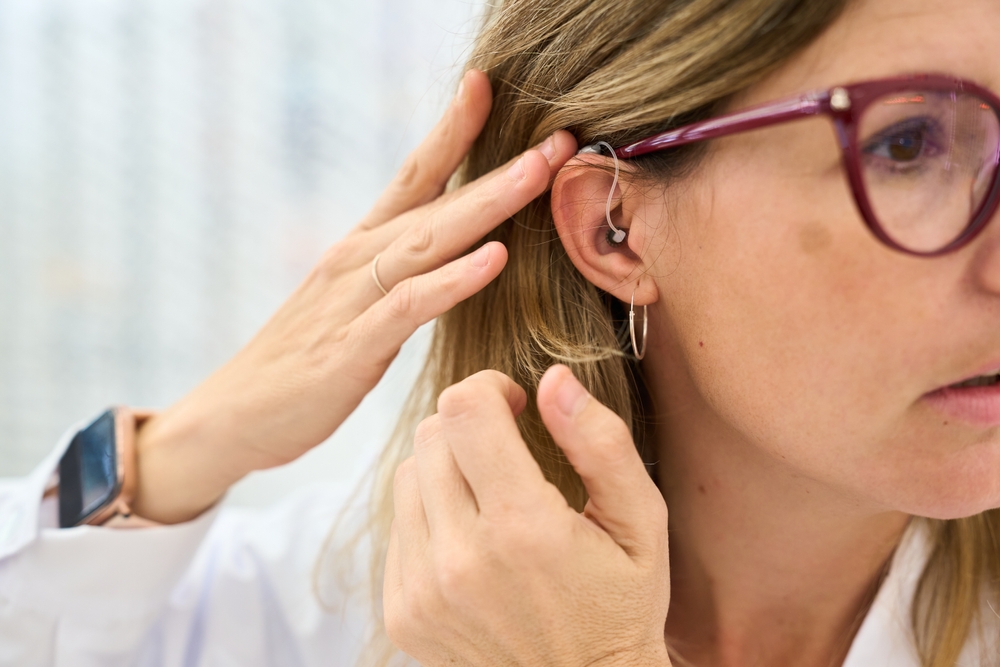
This is the most common style today. A tiny component sits behind the ear, connected by a nearly invisible wire to a small speaker in the ear canal. To onlookers, this streamlined design closely mirrors fashionable consumer electronics or sports earbuds. The vast majority of peers will fail to perceive the apparatus unless conducting a highly deliberate close-up inspection.
Streamlined Behind-the-Ear (BTE) Systems
While these models house all electronic components within a casing resting behind the pinna, their dimensions are drastically reduced compared to legacy models. They are typically prescribed to resolve advanced levels of hearing impairment, generating exceptional sound amplification without the cumbersome weight users traditionally dread.
The key takeaway: Today’s discreet hearing aids are designed to fit your life, not announce themselves.
How Current Hearing Technology Outperforms Traditional Amplifiers
The recent metamorphosis of hearing instruments extends far beyond mere cosmetic downsizing. In the current era, these processors operate like sophisticated wearable computers rather than simple analog sound amplifiers. A vast majority feature native Bluetooth connectivity, enabling seamless, wireless streaming of telephonic communication, media, and television audio directly into your auditory pathway.
Most come with smartphone apps, so you can adjust volume or switch settings without ever touching the device. If you enter a chaotic, crowded room, you can optimize your digital noise reduction settings to isolate speech within seconds. Advanced rechargeable battery banks have effectively replaced the small, fragile power cells that used to cause immense frustration. Users simply place their instruments into a charging cradle before sleep, mirroring standard smartphone maintenance routines.
Overcoming the Psychological Barriers to Better Hearing
Despite understanding these technological quantum leaps, psychological resistance remains highly common. Exploring hearing aid options can be challenging on a mental and emotional level because it’s an admission that our hearing isn’t what it used to be. This mental hurdle can make an individual feel exposed, creating a false impression of losing authority over personal wellness.
However, an alternative, empowering framework exists: utilizing hearing technology is never an indicator of structural failure. They’re simply a sign of change, which happens to us all. Adopting this tech is definitive proof that you are actively taking charge of your health to empower and protect your daily cognitive function.
Imagine wearing a discreet, barely (if at all) visible device and finally being able to follow along in conversation, hear better in crowds, and focus on the things that really interest you. This is the definition of true personal empowerment!
See For Yourself What Today’s Hearing Aids Look Like
The quickest way to erase your grandfather’s mental model is to physically interact with twenty-first-century hearing tech. Our clinical team cordially invites you to visit our facility, interview our staff, and evaluate different form factors in a stress-free, zero-obligation environment. Think of your visit as an educational open-house to experience the lightweight engineering of modern hearing instruments firsthand.
The overwhelming majority of our patients leave their consultation thoroughly amazed by the compact scale, luxurious comfort, and acoustic clarity of current technology! Please contact our patient care coordinators or utilize our digital portal to secure your consultation this week.