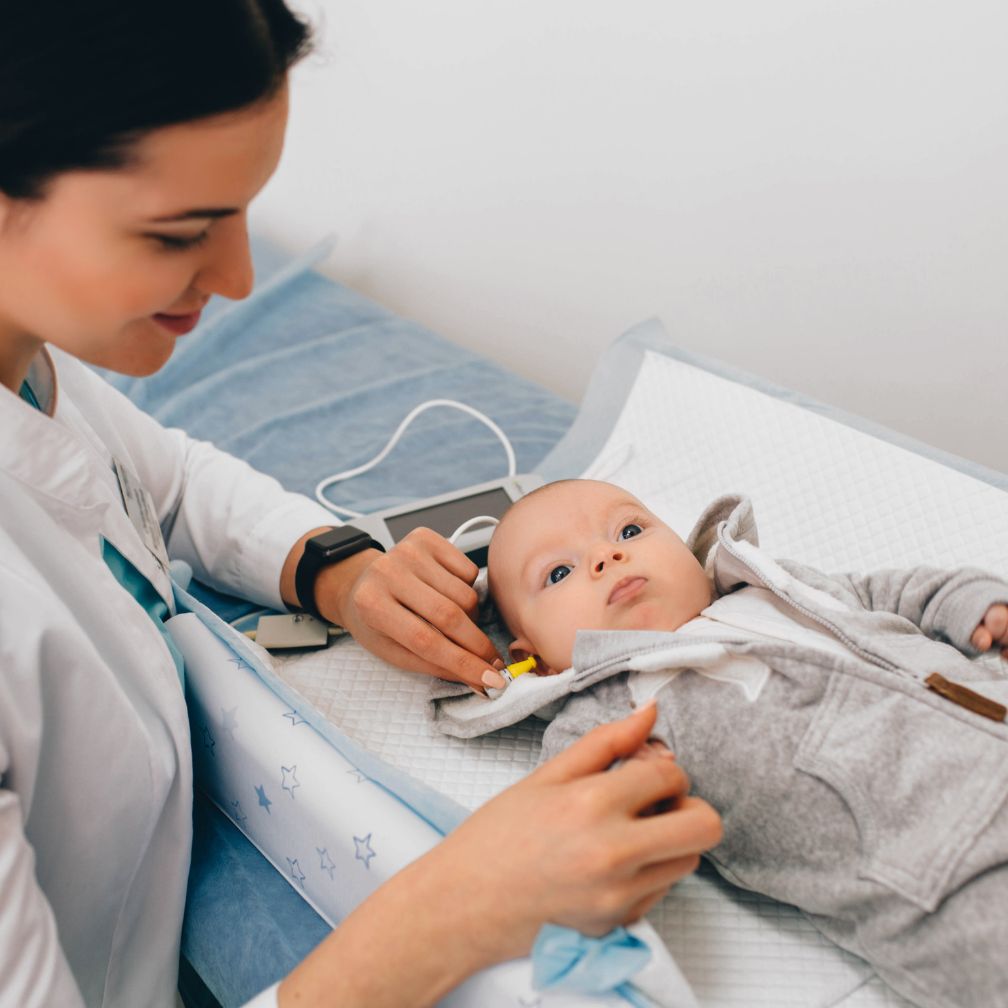
For mothers and fathers with newborns, discovering their infant faces auditory loss can seem profoundly disheartening to navigate. Fortunately, through prompt detection and medical intervention, young children with hearing deficits are able to flourish remarkably. Without doubt, such infants can learn language, social capabilities, and meaningful relationships within their community, bringing about a truly fulfilling life!
Pairing pediatric hearing aids with cochlear implant systems provides two remarkable clinical tools for helping infants with hearing deficits. Below, our guide evaluates their key operational details so you can select the proper choice for your baby.
Understanding Infant Hearing Loss
Auditory challenges in babies frequently result from an array of medical influences, including:
- Spontaneous genetic mutations (even in families with zero background of impairment)
- Congenital pathogen exposures including cytomegalovirus (CMV) and rubella agents
- Labor complications, featuring perinatal hypoxia or premature delivery
- Particular clinical medications utilized throughout neonatal intensive care
What matters above all else? Prompt clinical identification. Because of this, newborns in the United States are screened for auditory challenges prior to hospital discharge. Specialized pediatric hearing clinicians consistently enforce the official “1-3-6” intervention timeline:
- First-stage auditory screening conducted within 30 days post-birth
- Thorough clinical diagnosis established prior to 3 months
- Direct clinical management (utilizing hearing tools or specialized rehabilitation) established before 6 months of age
Attaining these developmental checkpoints provides infants an optimal path toward speech acquisition, language mastery, and cognitive growth. Should you seek further counsel surrounding screening protocols, your child’s pediatrician will gladly guide you!
Pediatric Hearing Aids for Young Babies
When addressing infants with mild to severe auditory impairment, digital hearing aids routinely constitute the recommended first step. These compact, external instruments boost ambient audio signals, helping babies process spoken dialogue and everyday sounds more distinctly.
Primary hearing aids remain:
- Fully safe for clinical use in babies merely weeks post-birth
- Manufactured with soft, gentle ear impressions that change alongside early child development
- Furnished with child-proof battery covers and specialized pediatric safety components
- Custom-calibrated by a certified pediatric audiologist to accommodate your infant’s exact hearing needs
While your child matures, these hearing aids demand periodic adjustments to ensure snug placement and optimal performance.
Understanding Cochlear Implantation for Babies
When a child presents with severe to profound sensorineural auditory loss while getting minimal improvement from hearing aids, care teams frequently advise a cochlear implant. In distinction from standard acoustic hearing devices, cochlear implants:
- Require surgical placement within the inner ear
- Safely route around damaged structures of the inner ear anatomy
- Transform ambient sound into direct electrical pulses that trigger the acoustic nerve directly
Advanced cochlear implant devices serve as:
- Officially cleared by the FDA for implementation in infants as young as 9 to 12 months
- Remarkably effective when paired with early auditory-verbal therapy and robust family support
- Cleared only after a rigorous evaluation process by an audiologist alongside an ENT physician
Such a comprehensive process requires radiological imaging, detailed hearing tests, and detailed consultations regarding anticipated long-term progress.
Hearing Aids Versus Cochlear Implants: A Direct Comparison
- Mild to severe hearing loss relies on Hearing Aids; Severe to profound hearing impairment calls for Cochlear Implants
- Non-Invasive external fitting: Hearing Aids; Surgical insertion required: Cochlear Implants
- Sound processing amplification: Hearing Aids; Electrical signal stream conversion: Cochlear Implants
- Usage can begin in early infancy: Hearing Aids; Surgery can begin at 9-12 months: Cochlear Implants
Summary Thoughts: Supporting Your Child’s Hearing Journey
If your newborn faces a confirmed hearing impairment diagnosis, rest assured that clear options and dedicated care teams are available. Under the care of specialized pediatric hearing doctors, numerous children grow to master language skills that are on par with their peers.
Whether your child is a candidate for hearing aids or cochlear implants, acting swiftly creates a profound lifelong advantage.
Are you looking for clarity regarding your infant’s hearing development? Contact our clinical team today to arrange a comprehensive evaluation and customized treatment program.